Member Spotlight: Don Richards | Turning Farm and Ranch Succession Questions into a Defined Process
 Succession Planning Resource
See how Don Richards, CSP®, applies agricultural succession planning to help families, successors, and advisors prepare for transition.
Profile Snapshot
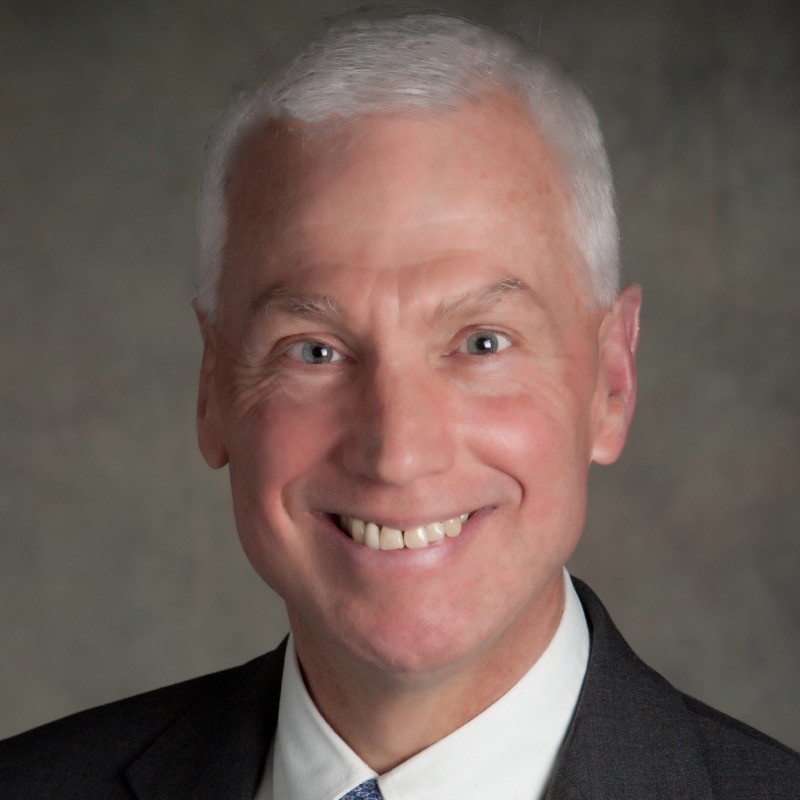
Don Richards
CFP®, CPFA®, CSP®

Centennial, Colorado
Don Richards, CFP®, CPFA®, CSP®, has worked as a financial advisor and independent insurance broker since 1984. He founded The Richards Financial Group, Inc. and Texarado Western Advisors, LLC, which serve individuals, families, crop and livestock producers, agricultural service providers, and other closely held businesses. He earned the Certified Succession Planner™ (CSP®) designation in 2025.
Most farmers and ranchers never announce a retirement date. An owner scales back the herd, hands off a few responsibilities, keeps a hand in the operation, and stays involved for years after the next generation takes the lead. Meanwhile, the family is still deciding whether to keep the operation running, pass it to a successor, sell the land, or find something in between.
Those decisions extend beyond the balance sheet. They touch identity, financial security, family relationships, and what the land is supposed to mean for generations still to come.
For Don Richards, that is exactly why agricultural succession must be treated as a process rather than a single event.
Succession Is Broader Than Naming the Next Owner
One misconception appears more often than any other in Don's work: the idea that succession planning starts and ends with picking a successor.
Identifying, developing, and mentoring the next generation matters. But that decision cannot stand apart from the senior generation's financial needs, the family's expectations, the business's structure, the risks associated with the transition, or the estate plan meant to support it all.
“I don't want somebody to mistakenly conclude that it's just the identification, development, and mentorship of a successor,” Don said.
Don organizes agricultural transition conversations around five connected areas: business planning, risk management, financial independence, succession planning, and estate planning. Move one, and the others shift with it. A family's choice to keep the operation, transfer it to a child, sell to a third party, or preserve the land changes the financial, legal, and risk questions that follow. An owner's continued financial dependence on the business can just as easily determine how fast authority or ownership can realistically change hands.
“We've got to cover them all,” he explained. “They all impact each other.”
Choosing Agriculture Over the “Sea of Sameness”
Don's focus on agriculture grew out of both experience and a deliberate choice about the work he wanted to lead.
After more than four decades in financial services, he reached a point where he no longer wanted to take on every opportunity that came through the door. He wanted out of what he called the industry's “sea of sameness” and into a client community that mattered to him.
“I love this. I love helping people,” he said. “For me, it was deciding to be a specialist in this area.”
Farm and ranch families gave him that focus. Don values the people, understands the world they operate in, and recognizes that their transition decisions rarely have an easy answer.
In Colorado and other regions under development pressure, a family may be weighing whether to continue a generations-old operation against a substantial offer for the land. A fifth- or sixth-generation family may also be considering a conservation easement, a decision that preserves agricultural use but changes the property's future value and marketability.
These decisions weigh stewardship, identity, and what the family wants the land to represent going forward, considerations that reach beyond the numbers.
Agricultural owners also tend to define retirement on their own terms. Rather than selling and walking away, many stay on the property or keep working in a smaller role, with the transition unfolding over several years. That reality forces families to get specific about how responsibilities, income, authority, and ownership will change along the way.
“It's not so clear-cut,” Don said. “It's going to be a slightly different conversation. But solutions exist, and they're better than having no plan.”
A Clearer Way to Apply What He Already Knew
Don got involved with the International Succession Planning Association® right as he was becoming more intentional about his specialty.
He already carried decades of experience in financial planning, insurance, risk management, and working with business owners. The CSP coursework did not replace that experience. It gave him a more organized way to apply it inside a broader succession-planning discipline.
Through ISPA®'s 10-factor Succession Matrix®, Don gained a sharper sense of how transition issues sequence and depend on one another. The curriculum reinforced that no single discipline holds the full answer. Financial, legal, operational, management, and family decisions must be considered together, even when different advisors implement them.
The coursework also gave Don a clearer way to explain that complexity to clients. Instead of presenting succession as one transaction, he can walk families through a series of connected conversations and help them understand why the work takes time.
The result is a sharper specialty and a deeper advisory scope. Don applies decades of experience to the specific needs of agricultural families, sharpening his focus rather than expanding a service list.
“Process, Process, Process”
One principle sits at the center of Don's approach: process.
He does not tell families that a single meeting or workshop will produce a finished plan. A good workshop surfaces concerns, opens conversations, and identifies next steps. The plan itself takes discovery, discussion, coordination, implementation, and ongoing review.
“Process, process, process,” Don said. “The ISPA approach validates what I learned a long time ago, but it helps me apply it very specifically to this sector of specialization.”
Among the ISPA tools Don relies on most is the Succession Planning Assessment™ (SPA™) to evaluate transition readiness. He adapts its language so agricultural clients can connect the questions to their own farms, ranches, and landholdings.
He also builds asset maps to show how a family's resources are owned. For an agricultural family, that can mean land, buildings, machinery, equipment, livestock, crops, and business interests spread across different entities or family members.
A family tree adds another layer, identifying everyone who may be affected by decisions about ownership, leadership, estate distribution, and governance.
Together, these tools move the conversation away from assumptions and toward a clear picture of what needs to be coordinated before any recommendation gets implemented.
Preparing the Successor for the Relationships Behind the Business
Successor preparation goes beyond teaching someone how to run the operation.
Agricultural businesses run on relationships built over decades. The senior generation knows the bankers, lenders, equipment dealers, suppliers, cooperatives, agency contacts, and advisors who keep things moving. Those connections cannot simply be written into an estate document and handed off.
“You've got to nurture those relationships all along the way,” Don said. “Don't wait and expect that the successor is going to read that somewhere in your estate document.”
Don encourages owners to introduce successors to these contacts well before the transition, so the next generation understands who the key relationships are, what role each one plays, and how that trust was built. A successor can know the crops, the livestock, and the equipment and still be unprepared to manage the relationships that support the business. Building those connections early gives lenders, vendors, and advisors time to build confidence in the next generation.
The examples are agricultural, but the lesson travels. A business transition includes the transfer of relationships and institutional knowledge, not just titles and assets.
The Detail That Can Change a Transition
One of Don's most valuable insights came from an issue he did not expect to run into.
While working through entity considerations for an agricultural family, Don learned that the ownership arrangement of a farm or ranch can affect eligibility for certain Farm Service Agency programs or payments. A change made to support an estate or ownership transition could create an operational consequence that the family and its advisors had not considered.
Don reached out to an FSA leader to better understand the issue. Their conversation reinforced the value of phased planning, with successors gradually taking on responsibility while ownership and entity decisions are reviewed with the appropriate professionals.
“That was a moment of validation that I didn't see coming,” Don recalled.
He is careful not to offer a universal formula or step into agency, legal, or tax advice outside his role. Instead, he raises the issue early so families know which questions to ask and which specialists belong in the conversation.
The example shows the value of specialization. An advisor who understands a client's industry is better positioned to spot the less obvious links between a planning recommendation and the client's operating world, and it is one more reason entity and ownership decisions should be reviewed with the appropriate legal, tax, financial, agency, and industry professionals before they are finalized.
Fair Does Not Always Mean Equal
Agricultural transition planning also raises hard questions about family fairness.
A common scenario: one child has worked in the operation and plans to continue it, while the others have built careers elsewhere. When the farm, ranch, or business represents most of the parents' estate, splitting everything equally can look like the simplest answer.
It rarely works out that way. Dividing ownership among all the children can leave the active successor sharing control with siblings who have no involvement in the business and different expectations for income, risk, or an eventual sale. The successor ends up running the operation without the authority to make long-term decisions.
Don pushes families to define what fairness means in their own situation, weighing the successor's years of involvement, contribution to the business's value, and sweat equity against the needs of family members who are not part of the operation.
There is rarely a formula that settles it. What settles it is a real conversation about how the family defines fairness and which assets or strategies can support that definition.
Don warns against what he calls “next-generation deferral,” handing over undivided interests to the children and assuming they will sort it out later. Without a stated vision, clear expectations, and a decision-making process, equal ownership tends to produce conflict instead of clarity.
What Well-Prepared Transitions Have in Common
For Don, the difference between a transition that moves forward and one that stalls comes down to three things: a defined process, coordinated advisors, and early communication.
A process gives a family confidence that the transition will unfold across multiple decisions over time. It creates continuity between meetings and reduces the likelihood that important issues are postponed or handled in isolation.
Advisor coordination matters just as much. The CPA, attorney, financial advisor, banker, and risk professional should be talking with one another, with the client's permission. The client should stay informed, but should not have to carry every message between professionals. When advisors work in silos, gaps and conflicting assumptions creep in, weakening the plan.
And families have to be willing to talk before urgency forces the issue. The senior generation, the successor, and other family members often hold different assumptions about the future. Those assumptions need to be discussed out loud, not inferred.
“Having a process, having coordination, and honest, earnest, early communication—those are huge differentiators,” Don said.
The lesson applies to every advisor working with a closely held business. A well-prepared transition comes from how effectively the people, decisions, and advisors are brought together over time.
Client and Referral Focus
Don's work is especially relevant for:
- Farm and ranch owners and families
- Crop and livestock producers
- Agricultural service providers
- Closely held businesses preparing for ownership or leadership transition
- Families deciding whether to continue, transfer, preserve, or sell an operation
His work often involves collaboration with:
- CPAs and tax professionals
- Estate- and business-planning attorneys
- Agricultural bankers and lenders
- Insurance and risk-management professionals
- Financial and wealth advisors
- Agricultural agencies and industry organizations
- Other specialists serving family and closely held businesses
Preparing Everyone in the Transition
Agricultural succession asks families to prepare for more than a transfer of land or ownership. Families need a shared sense of what they want to preserve and how they define fairness. Successors need experience, authority, relationships, and time. Advisors need a coordinated process that links decisions across and beyond their own disciplines.
Don's approach shows what happens when a seasoned advisor applies decades of experience to a clearly chosen client community. By pairing his agricultural focus with the processes and tools ISPA and the CSP® gave him, he is helping families start the important conversations before circumstances make decisions for them.
Explore ISPA Resources
The International Succession Planning Association supports advisors with practical education, real-world tools, and a multidisciplinary professional community.
- See how other advisors are positioning succession planning as their edge in our ISPA Member Spotlight series
- Get credentialed as a Certified Succession Planner™ and stand out to business owner clients
- Become an ISPA member and access the resources built for succession planning advisors
Don Richards, CFP®, CPFA®, CSP® is an investment advisor representative of and offers securities through Cetera Wealth Services, LLC, member FINRA/SIPC. Advisory services are offered through Cetera Investment Advisers LLC, a registered investment adviser. Cetera is under separate ownership from any other named entity. Cetera branch office address is 6025 South Quebec Street, Suite 170, Centennial Colorado 80111, and branch office telephone is (720) 488-6870.
Categories: : ISPA® Member Spotlight
Continue Learning
Signup for our newsletter, and follow us on social media for guidance, and updates focused on real-world succession planning.