Why Succession Plans Stall: What Advisors Should Check Next
 Succession Planning Resource

Why succession plans stall after an owner agrees: find the unfinished task, pending approval, or decisions still going to the owner.

Why do succession plans stall after an owner agrees to a direction? Suppose the agreement is drafted and the successor runs daily operations, yet managers still take major decisions to the owner. Your first job is to learn what the parties agreed would change.
Quick Summary
To learn why succession plans stall, separate unfinished work, pending approval, and authority still held by the owner. Check what people agreed to, what changed, and who still makes decisions. Then weigh the effects of acting or waiting and bring the next question to the people authorized to decide.
What Has Actually Stopped?
Start with what the owner, successor, managers, or shareholders agreed to do next. Compare the plan with what happened. Meetings and completed documents alone do not show whether a decision was made or authority changed.
| What stopped? | What you need to clarify |
|---|---|
| An agreed task | What prevented completion? Is information, capacity, or help from another advisor missing? |
| A decision or approval | What remains undecided? Who has the authority to decide? |
| A transfer of authority | Which decisions still go to the owner? What approval or change in practice is needed? |
With the agreement drafted, you know one task moved forward. Check whether the owners approved the agreement and whether they assigned major operating decisions to the successor. Ask managers which decisions they still take to the owner and what they understand about the successor's role. Their answers help you locate the stopped step.
The International Succession Planning Association® (ISPA®) uses the Succession Matrix® to show what else the delay touches. If the stalled task involves an agreement, check Business Structuring. An approval held up by the owner's income needs touches Personal Financial Planning.
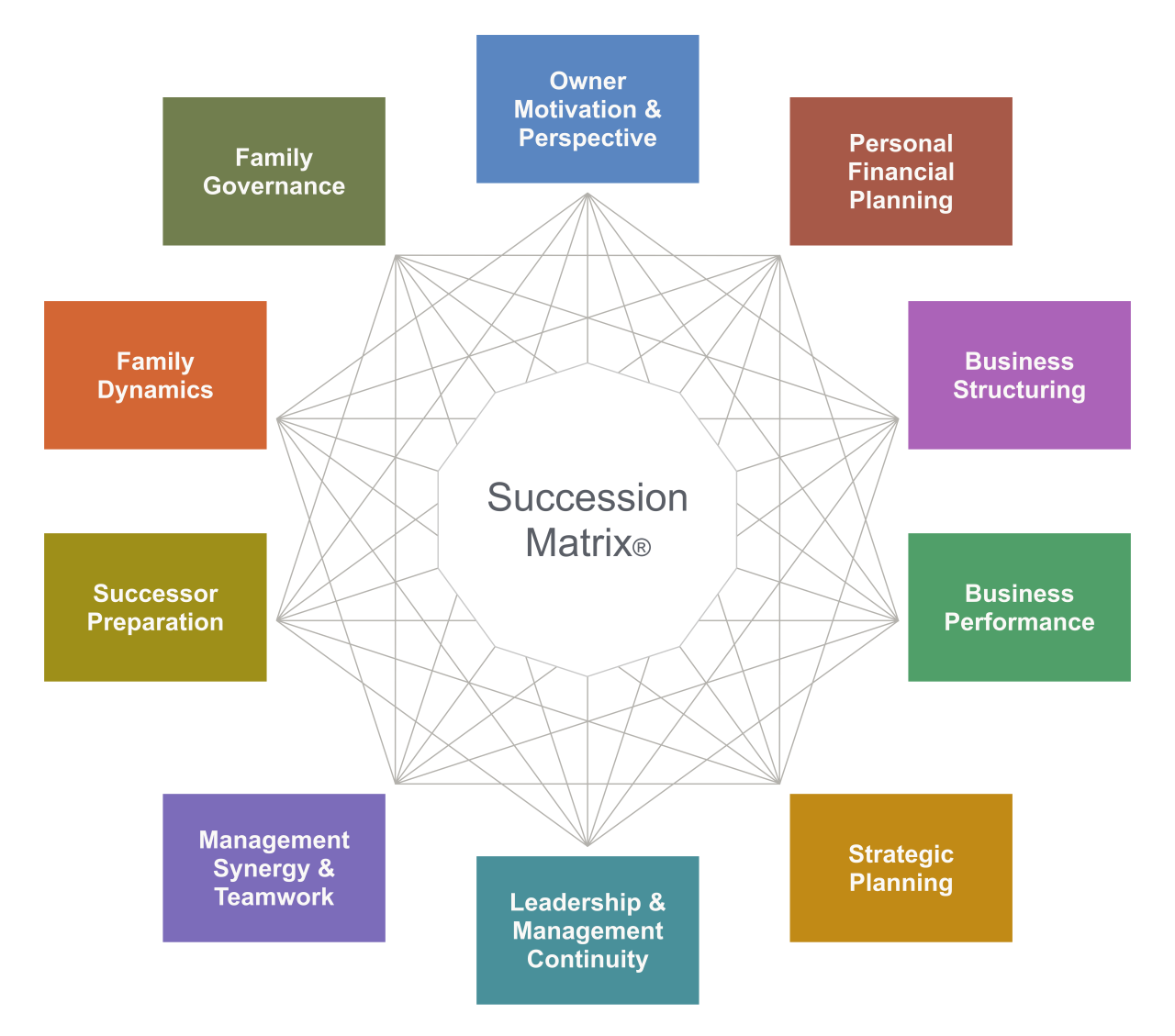
If major decisions still go to the owner, examine Leadership and Management Continuity and Successor Preparation. Use ISPA®'s guide to the ten planning areas to check the connections relevant to your client.
Review the plan with the people expected to carry it out. If their accounts differ, clarify what each person agreed to before treating the delay as resistance. Bring the open question to the client and coordinate the specialists whose input it needs. Each professional remains responsible for advice in their field.
What Should You Recheck to Understand Why Succession Plans Stall?
Recheck the assumptions tied to the stopped step. Ask what has changed in the owner's income needs, the company's cash needs, the successor's duties, or family expectations since the plan was agreed.
If the owner still relies on company income or benefits, ask whether the original financial assumptions hold. Bring in the appropriate financial, tax, and legal professionals before the client decides on the transfer. This question affects both the owner's security and the successor's opportunity to lead.
ISPA® member Don Richards, CFP®, CPFA®, a Certified Succession Planner™ (CSP®), links an owner's need for business income to the pace of a farm and ranch transition in his member spotlight. For other closely held businesses, ask: What does the owner expect to keep, and how will those needs be met?
Ask about the owner's future role, sense of purpose, and trust in the successor. In their Family Firm Institute article, “Rip off the Band-Aid: When a Faster Succession Is the Right Succession”, Rebecca Yu and Rob Lachenauer describe a planned handoff.
A board was in place, yet the owner kept key contracts and reentered decisions. Their account raises a question for your client: “What concerns you most about making this next change?” Let the owner's answer guide the review.
If a key manager has left or the successor has gained experience, reassess who can carry out the next step.
What Changes If You Act or Wait?
Acting moves work or authority forward; waiting keeps today's arrangement in place. To see why succession plans stall at a handoff, compare what each choice means for the owner, successor, and managers. During a wait for the owner's financial or personal answer, clarify who has authority.
If managers in your client's business still bring major decisions to the owner, ask which of those decisions the successor was meant to make. When the plan assigned those decisions to the successor, this pattern limits their chances to practice leading.
If the plan reserved those decisions for the owner, check whether the team understood the boundary. ISPA®'s guide to assessing successor readiness addresses the separate question of leadership preparation.
Moving ahead also requires a clear role for the successor and a management team ready to follow it. Check what changes for the owner's income, control, and obligations. Ask whether family shareholders have a decision to make under the governing documents.
Test the wait: Which major decisions stay with the owner, and which leadership experience does the successor lose during that time?
Keeping some decisions with the owner gives the successor time to prepare. A longer wait also limits the experience the plan was meant to provide. The Family Firm Institute authors argue that prolonged handoffs leave employees and family members unsure who leads and let old decision patterns return. Check the agreed decision rights and the successor's readiness before changing the pace.
Name the financial, management, or ownership question raised by acting now, along with what continues during the wait. That shows whose advice is needed next.
Who Has Authority to Decide What Happens Next?
The person or group authorized for the stopped step makes the next decision. Bring them the current facts and the consequences of acting or waiting. Specialists inform the choice within their fields.
Distinguish the people who run the business from those who approve an ownership change. Check the delegation of management duties and the approval terms for share transfers, pay, and borrowing under the governing documents.
If the managers in your client's business still go to the owner, identify who holds authority over those major decisions. Ask an attorney to confirm the governing documents before treating a job title or family relationship as proof of legal authority.
Gather the information needed to decide. For owner income, ask a financial or wealth advisor to review the resources needed after transfer. A CPA assesses business and tax assumptions, an attorney reviews rights and documents, and an insurance professional examines coverage or benefits the plan depends on.
For management authority, ask the owner and operating leaders to agree on who makes which decisions. Family disagreement about control belongs in an appropriate family or ownership forum; ISPA®'s guide to difficult family conversations addresses facilitation when that work is needed.
ISPA®'s CSP® program trains advisors to identify linked planning issues and coordinate professional input. In this review, that means keeping the client and specialists focused on the step that stopped.
Don Richards points to three traits in transitions that keep moving: a defined process, coordinated advisors, and early communication.
Knowing why succession plans stall should lead to a specific next action. The client can proceed once the missing task or approval is complete. They can change the next step for new conditions, revisit the direction if goals have changed, or pause.
For a pause, record the reason, work to be done, conditions for resuming, and review date. In the opening situation, confirm the successor's decision rights before asking managers to change where they take major decisions.
Questions for the Next Review
- What was supposed to happen, and what happened instead?
- Did the people involved explicitly agree to that step?
- What information, approval, or support is missing?
- Which assumptions have changed or still need to be checked?
- What would acting or waiting mean for the owner, successor, and business?
- Who will take the next action, and when will the team review it?
Key Takeaways
- To understand why succession plans stall, separate unfinished work, pending approval, and authority still held by the owner.
- Check changes in the owner's needs, the successor's role, and the business's capacity.
- A pause needs a reason, work to complete, and a review date. Otherwise, the team cannot tell whether conditions for the handoff have changed.
Continue the Planning Conversation
View the sample Succession Planning Assessment™ (SPA™) report to see how ISPA® presents connected readiness findings for discussion. Use the questions above to review your client's own stalled step.
Download the CSP® Program Guide to see how the training prepares advisors to connect planning issues and coordinate specialist input.
Join ISPA® to use the full SPA™ tool and guided discussion in your client engagements.
Questions Advisors Ask When a Succession Plan Stalls
Why do succession plans stall after the owner has agreed to a direction?
Why succession plans stall depends on the step that stopped. Common causes include missing information or resources for a task and an approval still pending. In other cases, managers keep sending decisions to the owner after an agreed authority change. Ask the people involved what they agreed to and what happened afterward.
Should an advisor set a new deadline for a delayed succession plan?
Set a new date when the client knows what needs to happen, who is responsible, and what must be resolved first. Check the assumptions behind the original date. If a financial, legal, or management question remains open, identify who has authority to decide and what information they need.
Who should review a stalled ownership or leadership transfer?
Start with the owner and the people who have authority over the stopped step. Ask a financial advisor about income needs, an attorney about rights under governing documents, and managers about the people and resources available to act. Bring in other specialists when the open question calls for their expertise.
How long should a paused succession plan wait before review?
Set the review point when you agree to pause. Tie the date to a financial review, a pending approval, or a defined decision the successor will lead. Record who owns each action and the date the group will reconsider the transfer. Avoid an open-ended delay.
Categories: : Leadership and Management Continuity, Succession Planning Models
Continue Learning
Signup for our newsletter, and follow us on social media for guidance, and updates focused on real-world succession planning.